K’gari · official safety checks
K’gari safety and preparation: permits, tides, 4WD and wongari
Prepare for K’gari with current Queensland Parks guidance on suitable 4WD vehicles, permits, beach driving, tides, alerts, camping and wongari safety.
Saved links stay in this browser.
On this page 9 sections
The short version
Know this before you plan
- Queensland Parks recommends a high-clearance four-wheel drive, preferably with low range; low-clearance and all-wheel-drive vehicles are not recommended.
- Obtain the required vehicle access permit before entering recreation areas and a camping permit before camping.
- Beaches are roads: normal road rules apply and conditions change with tides, weather and traffic.
- Plan beach driving for the lower-tide window and avoid the period around high tide; open the live conditions report before travel.
- Never feed wongari (dingoes), keep children within arm’s reach and secure food, rubbish and attractants.
Use a suitable vehicle and honest driver assessment
Queensland Parks recommends a high-clearance four-wheel drive, preferably with low range, for K’gari. All-wheel-drive and low-clearance vehicles are not recommended. A hire agreement must explicitly allow the intended roads and island use; a vehicle badge does not establish permission or driver competence.
Soft sand, washouts, creek crossings, exposed roots and changing beach exits demand different judgement from sealed-road driving. If the vehicle, experience or recovery plan is uncertain, a guided tour is the safer first-visit format.
Permits, bookings and current conditions
A vehicle access permit is required before driving in the relevant recreation area, and camping requires a separate camping permit. Carry the confirmation in the form required by Queensland Parks and follow current display instructions.
Open the K’gari conditions report and park alerts immediately before travel, then again when reliable reception is available. Static maps and saved itineraries cannot confirm that a track, beach access or facility is open today.
Beach driving and tides
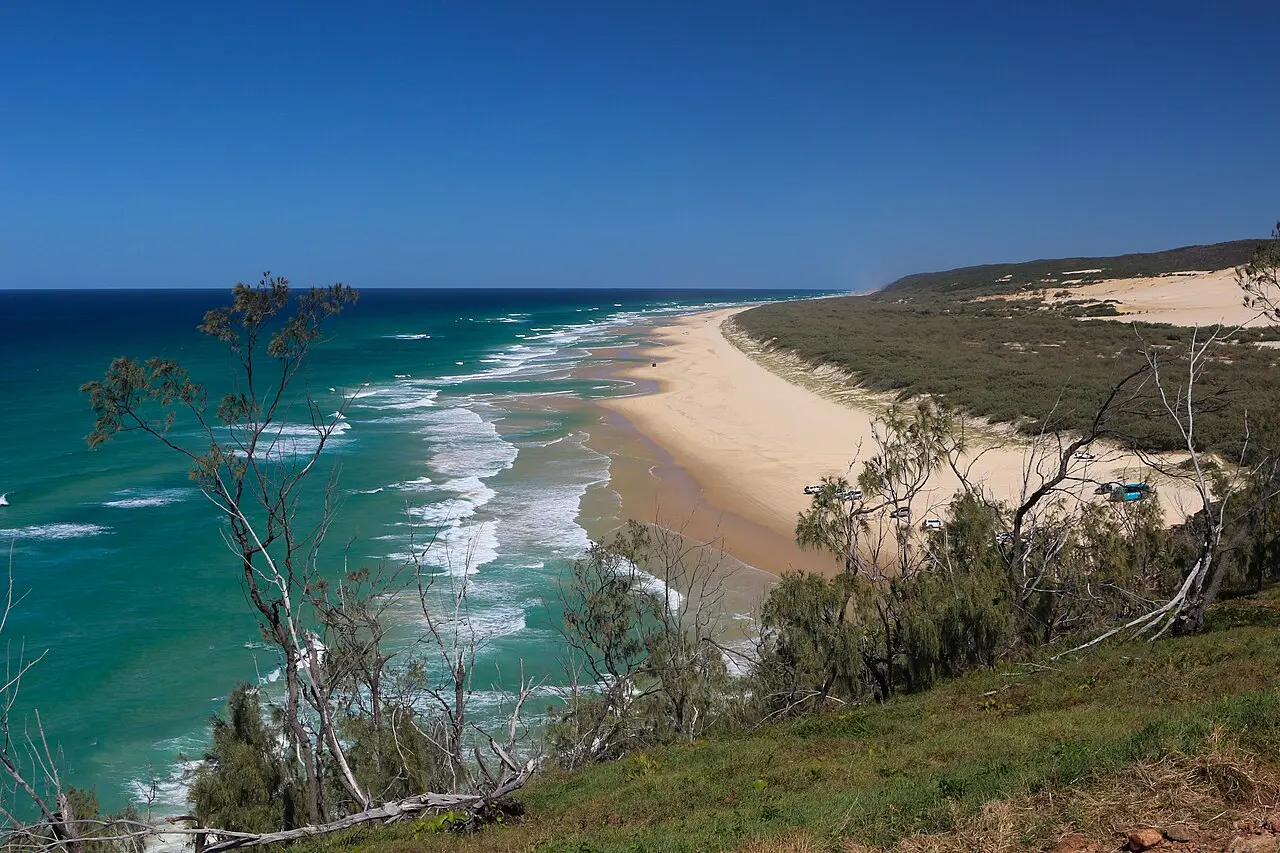
K’gari beaches are gazetted roads. Normal road rules, speed limits, seatbelts and drink-driving laws apply. Expect pedestrians, wildlife, other vehicles, washouts, aircraft activity and an uneven waterline.
Queensland Parks advises planning beach travel for about two hours either side of low tide and avoiding about two hours either side of high tide. Treat that as a planning rule, not a guarantee: swell, rain, erosion and creek conditions can make a route unsuitable at other times too.
Wongari safety
Wongari are wild animals. Never feed them or leave food, fish, bait, rubbish, toiletries or cooking equipment accessible. Keep children within arm’s reach, walk in groups where possible and use fenced camping areas when available.
If a wongari approaches, do not run. Stand tall, face it, keep your arms folded, remain calm and back away slowly. Follow the current Queensland Parks dingo-safe guidance and report threatening behaviour through the official channels.
Water, fuel, communications and recovery
Carry sufficient drinking water, food, essential medication, sun protection, a first-aid kit and recovery equipment appropriate to the vehicle. Fuel and supplies are limited and travel takes longer than a kilometre count suggests.
Tell a reliable person the route and return plan. Mobile coverage is not continuous, so download permits and essential information before departure. Do not rely on a phone as the only navigation, communication or emergency plan.
Children, swimming and camps
Keep children close around wongari, vehicles, water and unfenced camps. Follow signs at lakes, creeks and beaches; do not infer that a picturesque stop is safe for swimming. Secure the camp before sleeping or leaving it, and never encourage wildlife for a photograph.
Practical checklist
- Confirm vehicle suitability and hire permission.
- Buy required vehicle and camping permits.
- Open live conditions and alerts.
- Build the drive around the tide window.
- Secure all food and keep children within arm’s reach.
Straight answers
Frequently asked questions
Can I take an AWD to K’gari?
Queensland Parks does not recommend all-wheel-drive or low-clearance vehicles. Use a suitable high-clearance 4WD and confirm any hire agreement.
Do I need a vehicle permit?
Yes for driving in the relevant K’gari recreation areas. Camping requires its own permit.
When should I drive on the beach?
Queensland Parks advises about two hours either side of low tide and avoiding about two hours either side of high tide, subject to current conditions.
What should I do if a wongari approaches?
Do not run. Stand tall, face it, fold your arms, stay calm and back away slowly, following current park guidance.
Can I rely on mobile reception?
No. Coverage can be unreliable. Download permits and essential information and carry an appropriate offline and emergency plan.
Sources and last checked
Time-sensitive details were checked against operator-owned or official sources. Conditions, timetables and operating details can change; recheck before travel or payment.
View 4 sources and check dates
- Queensland Parks — visiting K’gari safely — checked 31 August 2026
- Queensland Parks — staying safe — checked 16 August 2026
- Queensland Parks — vehicle access permits — checked 16 August 2026
- Queensland Parks — be dingo-safe — checked 16 August 2026
Keep planning
Keep this guide handy
Save a link in this browser, copy it, or print a copy for offline use. Check opening hours and conditions again before you go.
Keep planning